 QUANTUM BREW
 / COFFEE WATER MINERAL FORMATS
Coffee mineral drops vs sachets: how to choose a format
Published on
Updated on
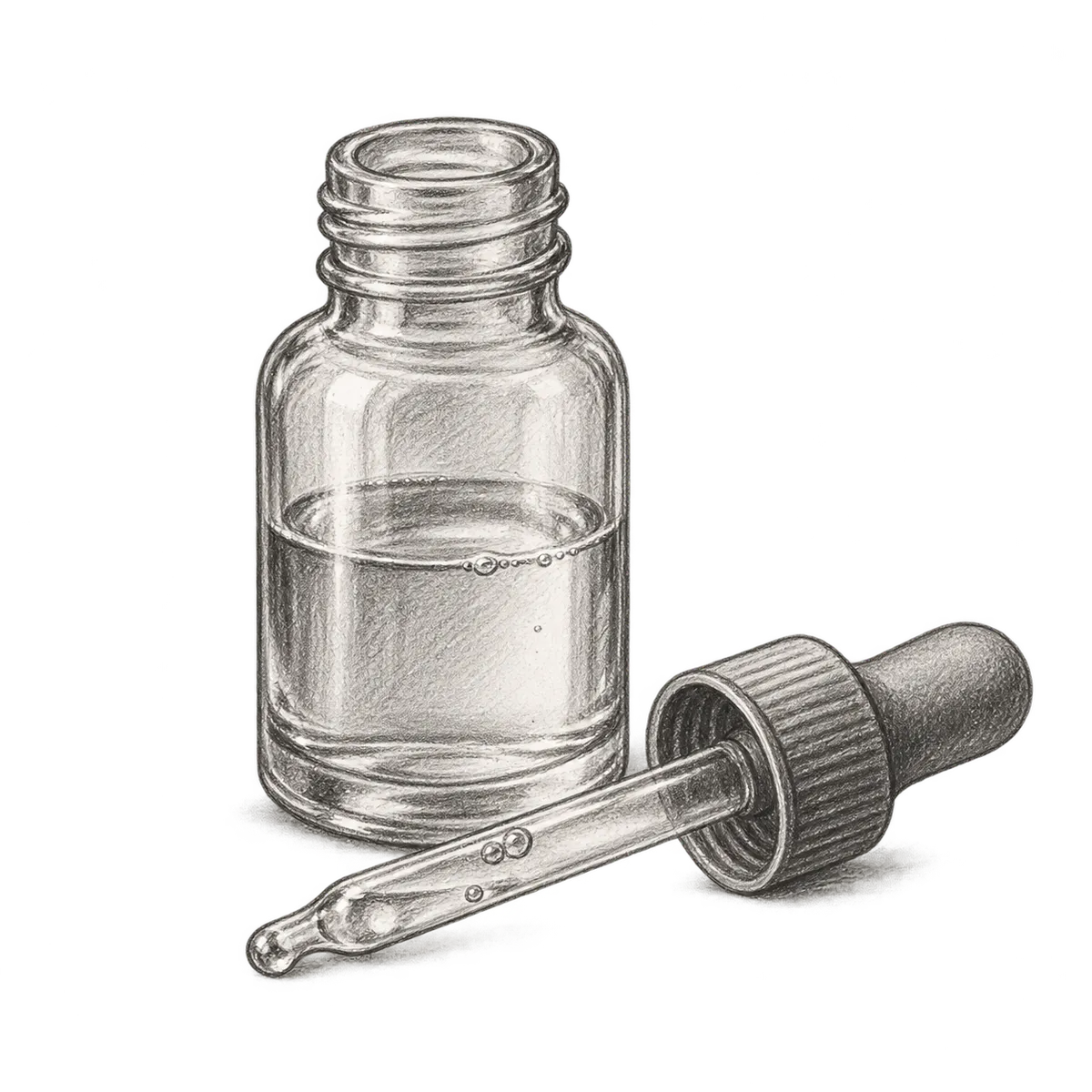
Searching for coffee water minerals brings up drops, liquid blends, sachets and recipes made from salts. The format changes your task: choosing individual components, measuring a dose or dissolving a prepared blend. No format guarantees a better cup. A useful choice starts with how much control you need and what you can measure consistently.
Start with your goal
To repeat a preparation with fewer steps, look for clear instructions for a volume of water you regularly use. To explore a recipe, ask which components you can vary independently. To make your own concentrates, account for the time needed for calculations, weighing, labelling and records.
Before choosing, distinguish the container from its contents: a bottle may contain one salt or several. One salt is not the same as one ion, either. Our minerals for coffee guide explains the distinction and helps you understand what actually changes when you adjust a dose.
Four formats, different tasks
| Format | Control and trade-off | What to measure | Base water |
|---|---|---|---|
| Single-salt concentrates | Adjust each salt separately; keep track of more individual doses. | Each concentrate dose and final volume, using the specified units. | The water specified by the recipe; retain its starting composition. |
| Liquid blends | Add several components together; changing the dose changes the blend as a whole. | Blend quantity and final volume, following its instructions. | The water specified by the manufacturer for that use. |
| Sachets or packets | Simplify a defined preparation; offer fewer independent adjustments. | Number of packets and the water volume they are intended for. | The water required by the product; do not assume any water works identically. |
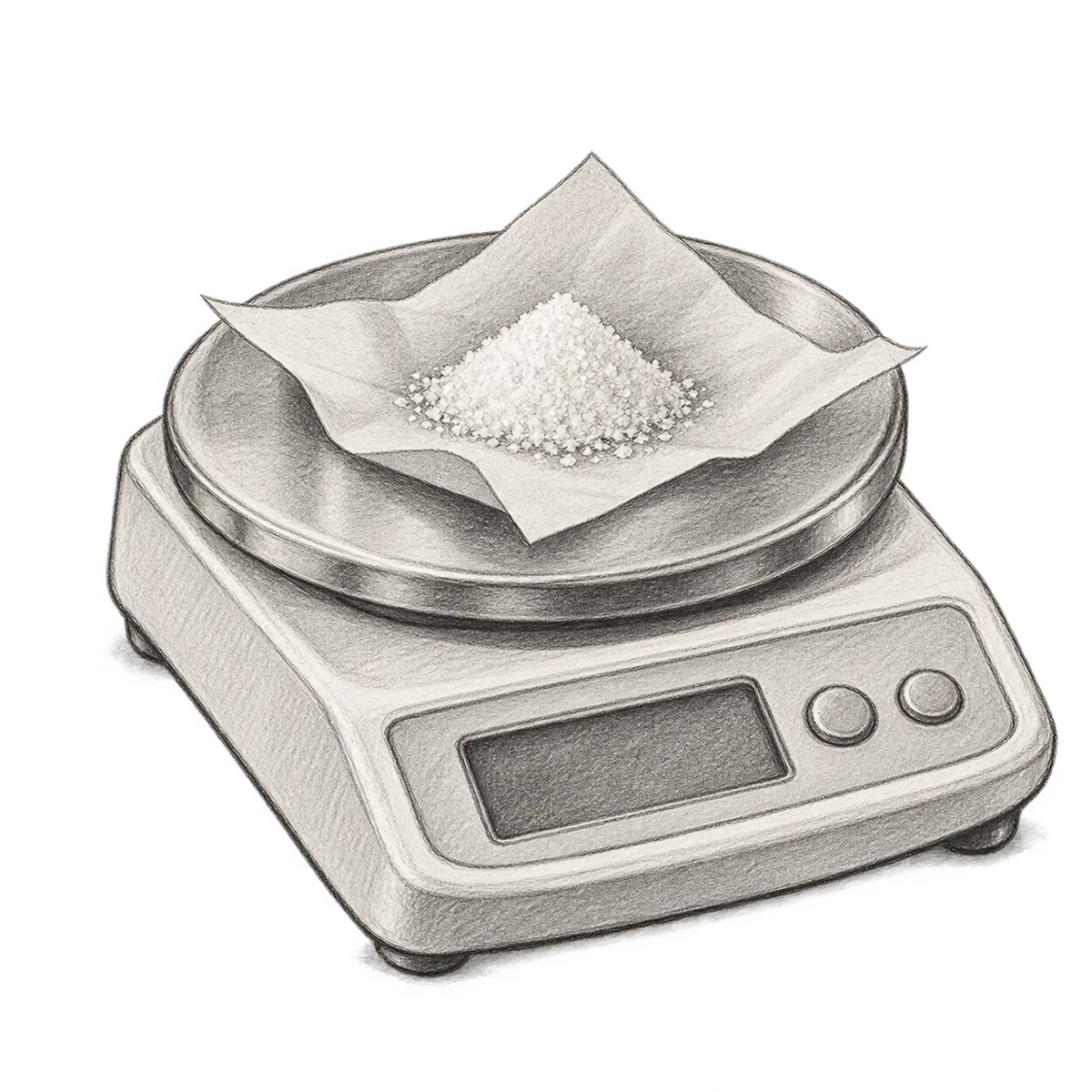
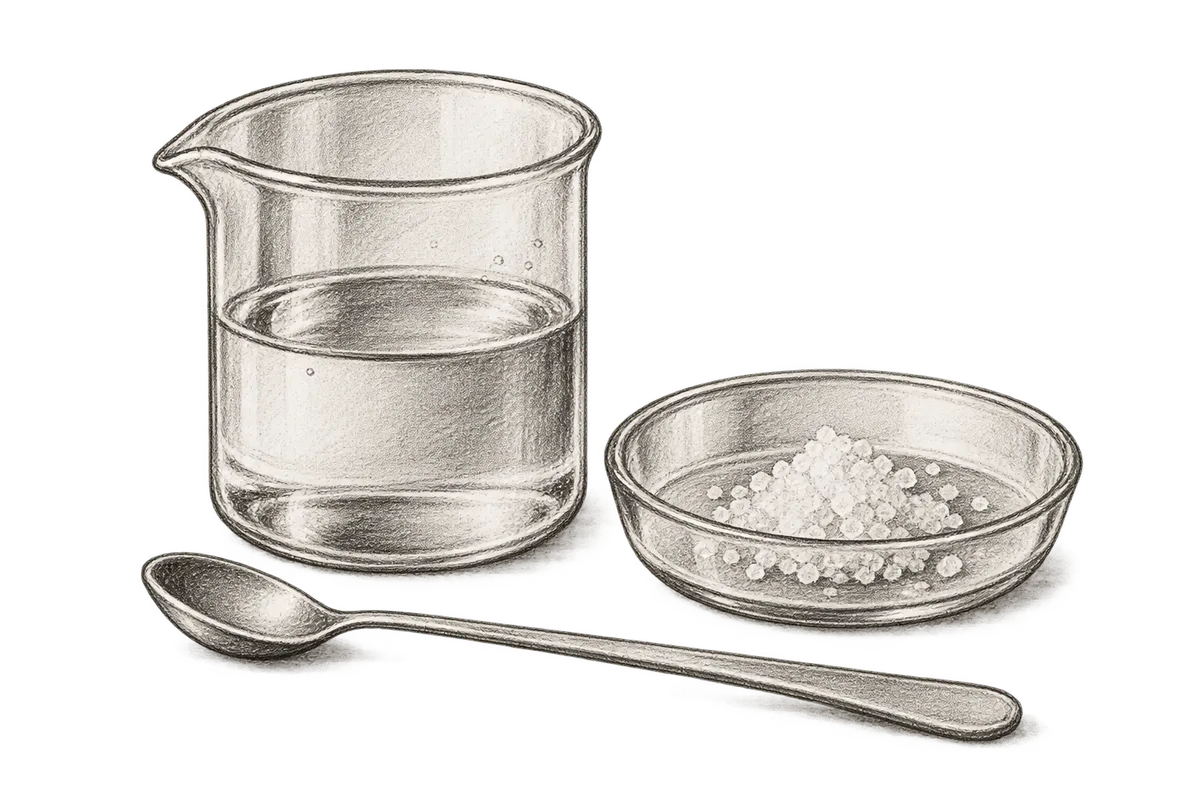
| DIY salts | Choose components and quantities; take responsibility for calculations, preparation and records. | Each salt’s mass and exact identity, water quantity and recipe dilution. | The water specified by a validated recipe, with known starting data. |
Compare the whole task. A simple dose loses its convenience if it requires a batch size you never use. A flexible system can become awkward if you do not want to record every component.
What to check before dosing
“Ten drops” is not a recipe you can transfer between brands. Solution concentration and the dosing system are part of the instructions. Do not interchange grams, millilitres and drops without a validated conversion for that product. Check whether the stated volume means the starting water or the final volume.
- Identify the product and instruction version; confirm whether it is added to brewing water or brewed coffee.
- Check the base water and intended batch size. “Filtered”, “distilled” and “reverse osmosis” are not interchangeable instructions.
- Use the specified instrument and unit. When weighing small quantities, check that the scale can measure them with the required precision.
- For recipes made from salts, retain the complete ingredient name, including its hydration state, and use ingredients suitable for food use.
A TDS value alone does not identify composition. Read our explanation of hardness, alkalinity, pH and dissolved solids before comparing results. For a coffee machine, also check the prepared water against the machine manufacturer’s specifications.
A commercial format example
One example of the sachet format is Third Wave Water, which offers blends for preparing water profiles. This example describes a format, not a ranking of quality.
Read the current instructions for the specific product. Two containers labelled “coffee water minerals” need not share the same concentration, composition or dose.
How to compare without mixing variables
First decide what you want to investigate: preparation effort, repeatability or your preference in the cup. Record the product, base water, dose, units and prepared volume. Keep the coffee, method and brewing recipe consistent when comparing waters. If their final compositions differ, do not attribute every difference to the packaging format alone.
Repeat the comparison and keep a reference sample. Record any issues too: an uncertain dose, a mixed-up bottle or a different volume helps explain the result. The interactive tasting tool saves impressions in this browser; it does not verify composition or calculate doses.
Where ION LAB fits
ION LAB is Quantum Brew’s proposal for exploring five salts through concentrates and a guided experience. The kit is at the pilot stage; retail availability, pricing and the final commercial format are still pending. Doses must come from the kit’s own validated instructions, not recipes for other brands.