QUANTUM BREW
 / WATER AND COFFEE
Coffee water minerals: calcium, magnesium and bicarbonate
Published on
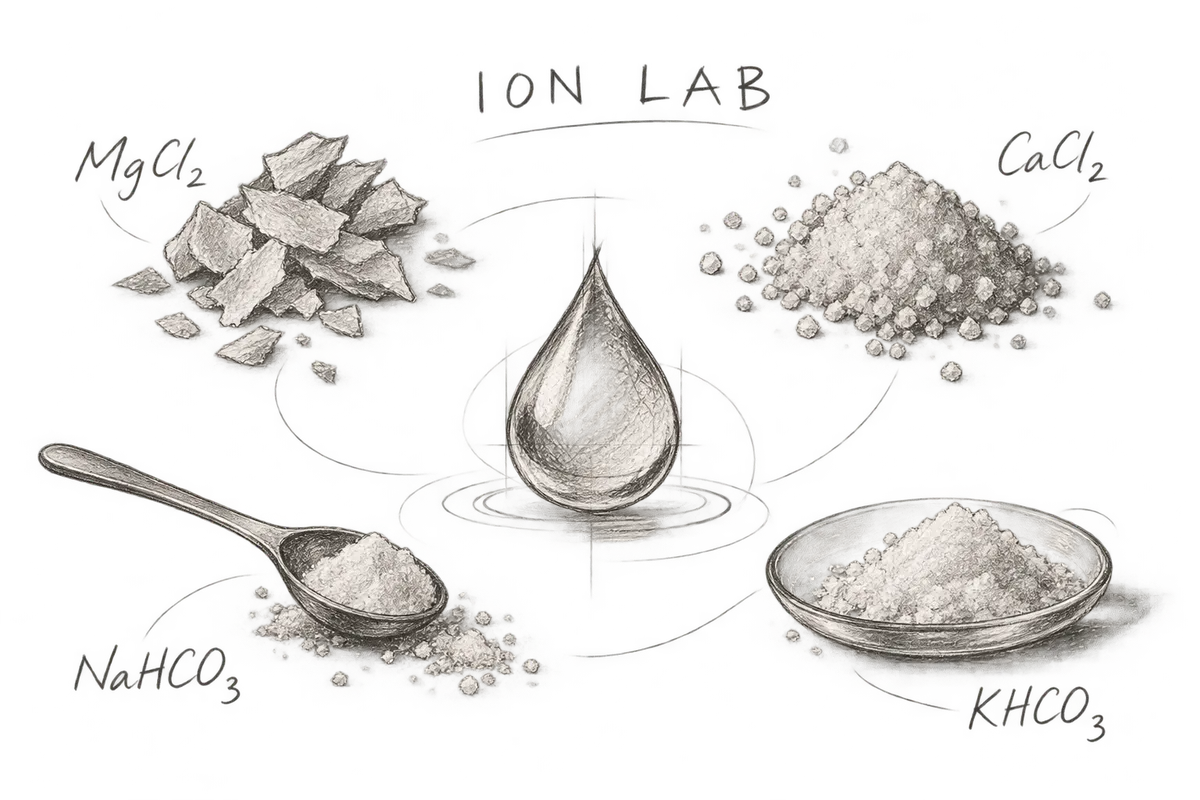
Minerals for coffee are easier to understand when we separate three questions: which salt we have, which ions it adds to water, and what we observe in a brewed cup. “Magnesium”, “magnesium sulfate” and “hardness” are not interchangeable names. This guide helps you read those differences and plan meaningful comparisons without assigning a fixed flavour to each component.
Minerals, ions and salts: three levels of information
A salt has a defined chemical composition. When it dissolves, we can identify the ions it supplies: calcium chloride supplies calcium and chloride; sodium bicarbonate supplies sodium and bicarbonate. Looking only at the first element in the name leaves out part of the composition. The table is a map for understanding names, not a brewing recipe.
What the five salts in the pilot kit contribute
The ION LAB pilot kit brings together these five salts. Their formulas identify components; they do not specify the concentration in the bottles or an amount to use.
| Salt | Ions supplied | Relationship to water |
|---|---|---|
| Calcium chloride · CaCl2 | Calcium Ca2+ and chloride Cl− | Calcium contributes to hardness. |
| Magnesium chloride · MgCl2 | Magnesium Mg2+ and chloride Cl− | Magnesium contributes to hardness. |
| Sodium bicarbonate · NaHCO3 | Sodium Na+ and bicarbonate HCO3− | Bicarbonate contributes to alkalinity. |
| Potassium bicarbonate · KHCO3 | Potassium K+ and bicarbonate HCO3− | Bicarbonate contributes to alkalinity. |
| Magnesium sulfate heptahydrate · MgSO4·7H2O | Magnesium Mg2+ and sulfate SO42− | Magnesium contributes to hardness; the formula includes water of crystallisation. |
Two salts that share magnesium do not share every component. Comparing magnesium chloride with magnesium sulfate means recognising the change in anion as well. No row by itself predicts sweetness, acidity or preference.
Hardness and alkalinity: keep the units
Hardness mainly relates to calcium and magnesium. Reporting it in mg/L as CaCO3 uses an equivalent value, not the mass of calcium or magnesium in mg/L. Alkalinity measures the capacity to neutralise acid; pH describes a different property. Bicarbonate in mg/L and alkalinity as CaCO3 are not interchangeable figures either. The water for coffee guide explains these distinctions further.
Read the complete formula before comparing
“Heptahydrate” is part of the identity of the magnesium sulfate in this table. Its water of crystallisation contributes to the mass of the salt. Copying an amount from a different formula or hydrate can change how much magnesium is added. For chlorides, also check the form on the label; the abbreviated formulas in the table do not identify a particular hydrate.
Before using a specification, check what each figure describes: a salt, an ion, a concentrate or the prepared water. If the concentration or chemical form is missing, that information remains unknown. A drops format does not resolve this: concentrates with similar names can have different compositions.
What the research tells us, and its limits
Hendon and colleagues (2014) studied interactions with a computational model. Rune and colleagues (2026) observed bicarbonate-related sensory changes but no reliably distinguishable hardness effects with the Colombian coffee and methods tested. These are different questions and forms of evidence: they do not support universal flavour promises or establish that hardness has no effect in every preparation.
Bratthäll and colleagues (2024) measured four acids with salts added before or after brewing one coffee. They found limited changes at lower concentrations and mostly similar results between the two timings. That chemical analysis does not assess every compound or every perception in a cup.
How to compare with context
- Define the question. “Can I distinguish these two waters with this coffee?” is more specific than searching for the best mineral.
- Keep a reference. Record the starting water, coffee, method and preparation so you can understand what changed.
- Separate data from perception. Copy the available figures with their units and record your impressions separately.
- Allow uncertainty. “I cannot distinguish a difference” and “I prefer this sample today” are useful results. Repeating the comparison lets you revisit an impression.
The interactive tasting tool helps organise and save observations. A record describes that experience; it does not turn a preference into a fixed property of calcium or magnesium.
Choose your next step
If you are comparing products, start with the declared composition and available instructions. Then consider the format in the guide to coffee mineral drops versus sachets. For ION LAB, pilot dosing and usage instructions are still awaiting approval. You can explore the project and learn to interpret its five salts without inferring doses from this table.
ION LAB / VISUAL NOTEBOOK
A small atlas of salts.
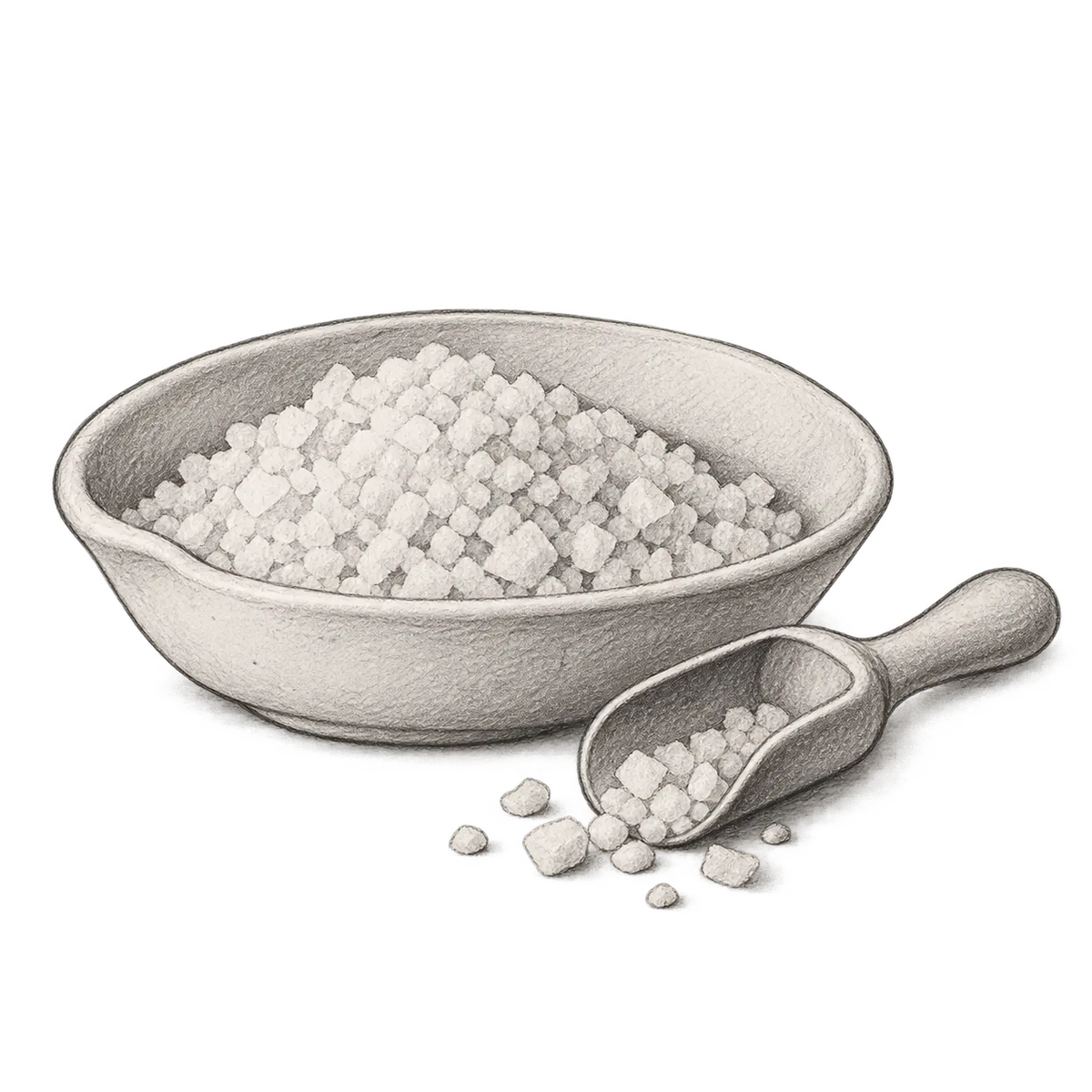
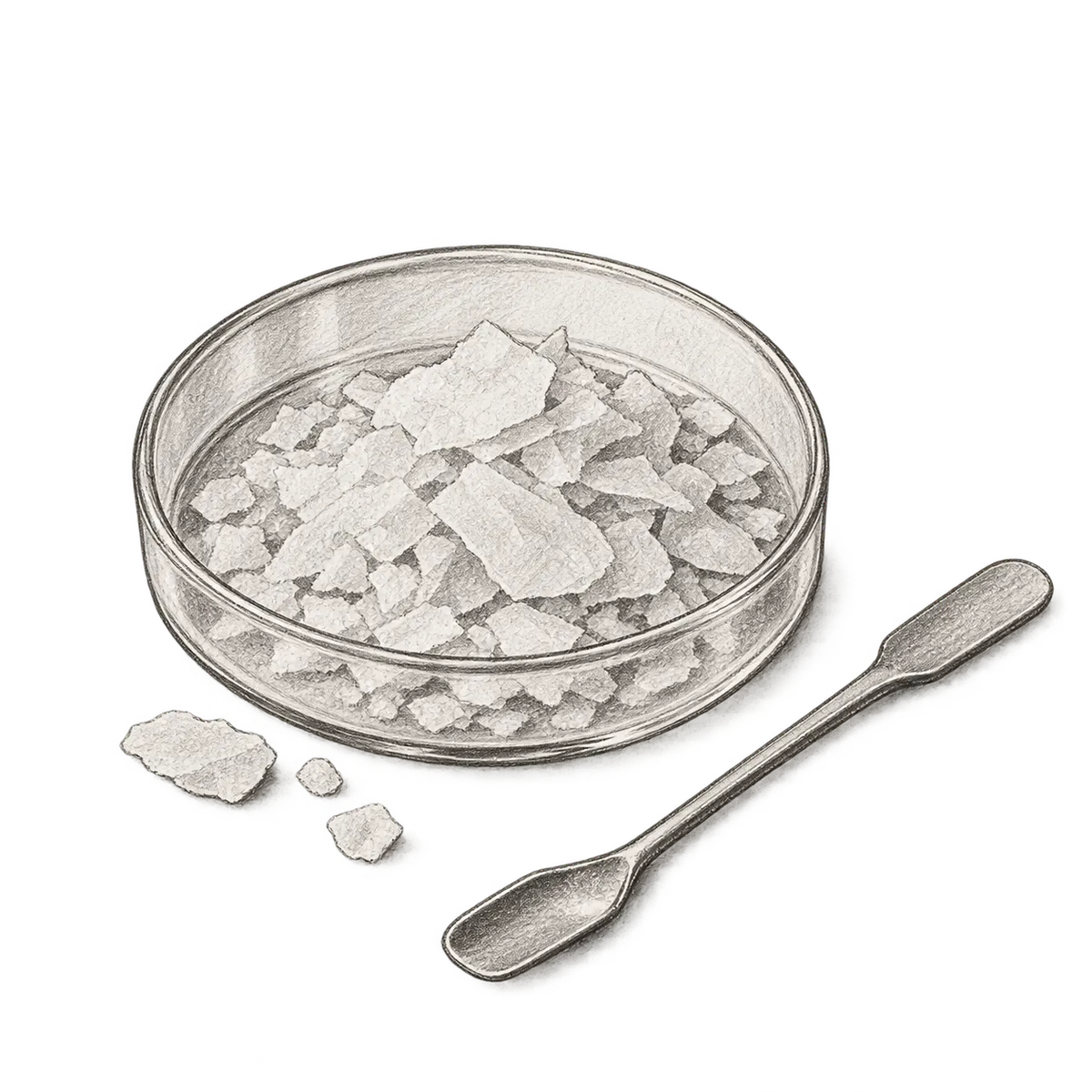
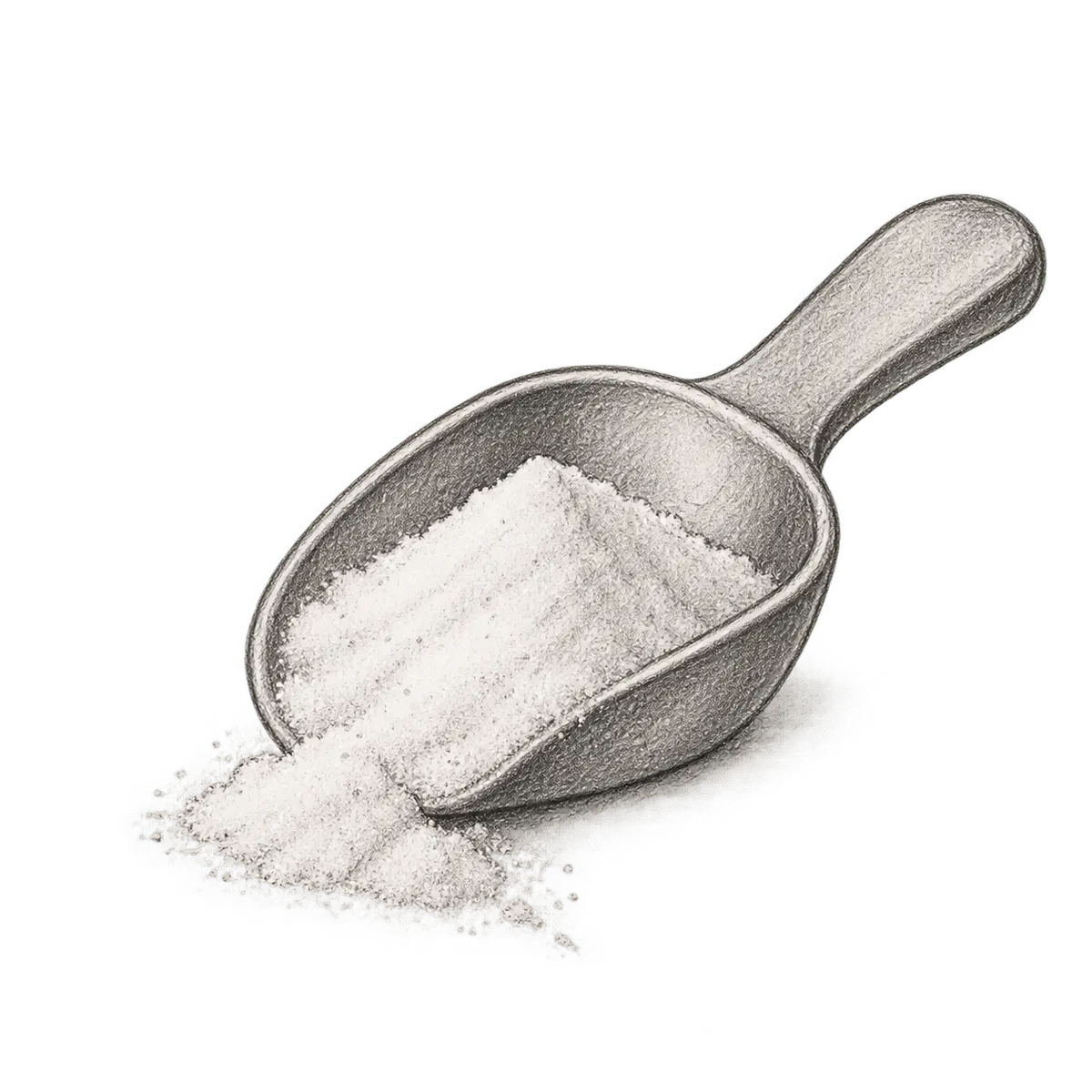
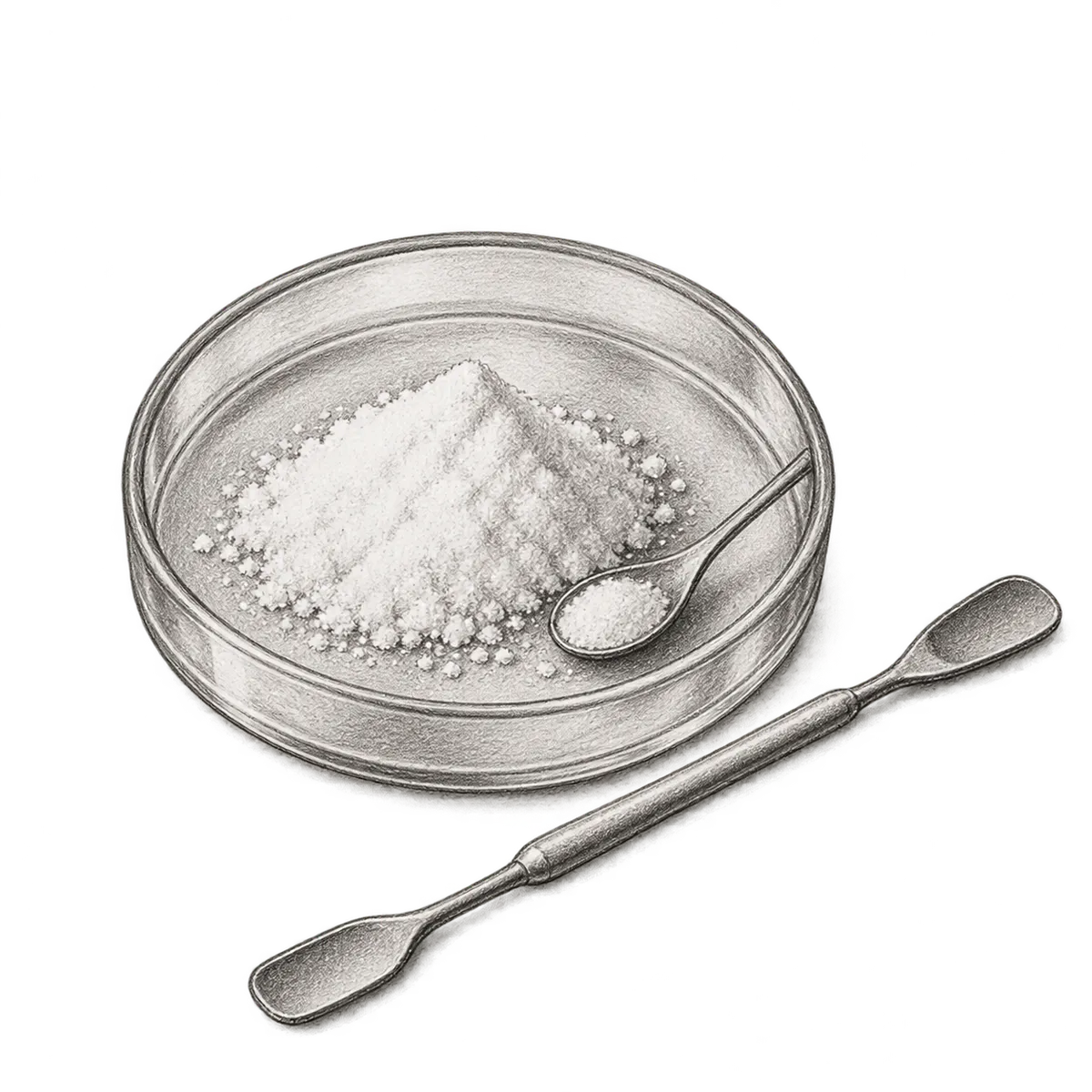
The five salts in the pilot kit, with their full formulas.
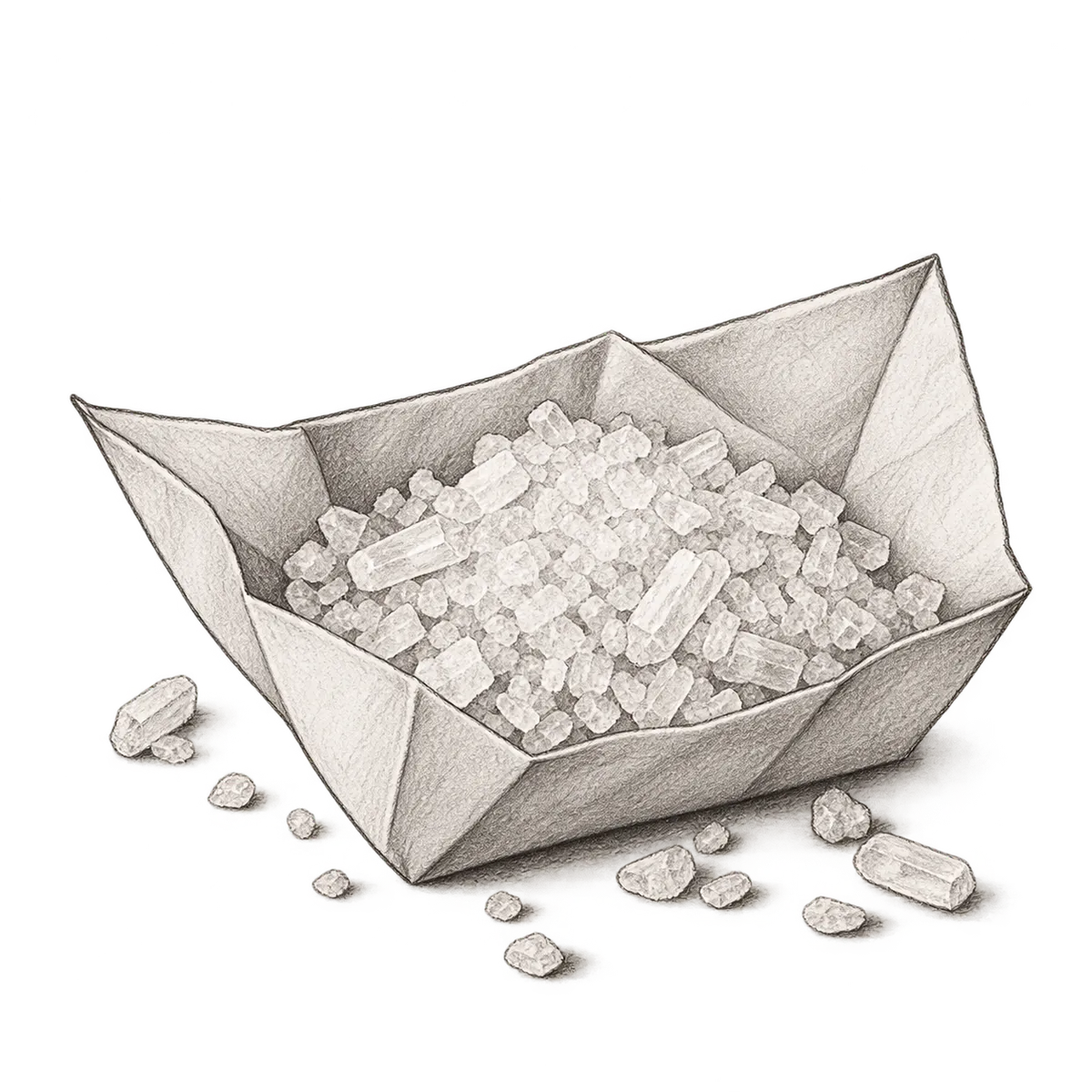
Other formulas in the notebook
These three salts are not among the five in the pilot kit. The drawings accompany the formulas; they are not to-scale crystal structures.